Krynica village, not the resort town
The Lemko community discussed here lived in Krynica village, the suburban village adjoining the better-known spa and town of Krynica. The commercial activity was concentrated in the town, while some Lemko families in Krynica village earned additional income by renting rooms and providing meals and lodging to Polish visitors. This gave some village families opportunities not available in more isolated agricultural communities.
Epifan Drovniak's own circumstances should not be confused with that relative prosperity. His later fame as an artist belongs to a later chapter of his life; these photographs preserve him first as a person within the Krynica village community.
1930 · Lemko wind orchestra

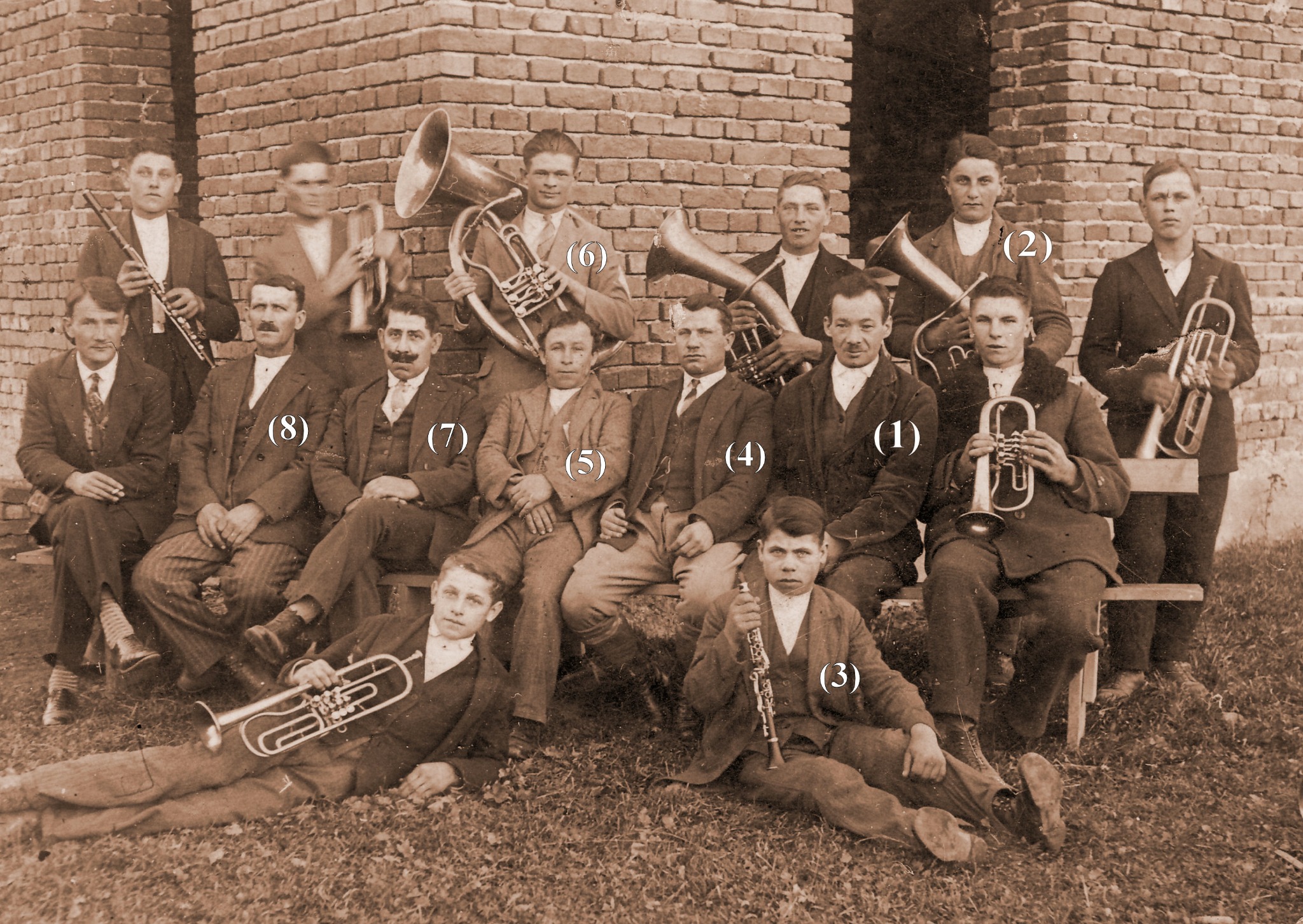
Identified members
- Епіфан Дровняк / Epifan Drovniak
- Андрiй Грoмосяк / Andrii Hromosiak
- Петрo Бискуп / Petro Byskup
- Михaл Бискуп / Mykhal Byskup
- Oлексaндр Греняк / Oleksandr Hreniak
- Теoзий Ткaчик / Teozii Tkachyk
- Івaн Бискуп / Ivan Byskup
- Пaвел Вислoцкій / Pawel Wislotskii
Other people in the photograph remain unidentified in the accompanying record.
1931 · Рускiй Духовий Оркестр в Криниці


Accompanying identification
- Михал Криницкій / Mykhal Krynytskii
- Aлексий Громосяк / Aleksyi Hromosiak
- Петро Криницкій / Petro Krynytskii
- Томко Завицкій / Tomko Zavytskii
- Павел Греняк / Pawel Hreniak
- Методий Трохановскій / Metodyi Trokhanovskii
- Констанция Трохановска / Konstantsyia Trokhanovska
- Пaнькo Турoк / Pan'ko Turok
- Асафат Горощак / Asafat Horoshchak
- нез. / unknown
- Андрий Громосяк / Andrii Hromosiak
- Софрон Ватащак / Sofron Vatashchak
- Епіфан Дровняк / Epifan Drovniak (Nikifor Krynicki)
- Антoн Кусик / Anton Kusyk
- Антон Греняк / Anton Hreniak
- Микита Громосяк / Mykyta Hromosiak, husband of Stefania Krynicka
- Петрo Бискуп / Petro Byskup
- Михaл Ґрaб / Mykhal Grab
- Стефaн Тимурa / Stefan Tymura
- Олексій Гойняк / Oleksyi Hojniak, husband of Yulia Hromosiak
Numbering note: the supplied identification includes a #20, while the numbered reference image visibly carries labels through #19. The archive preserves the supplied identification without guessing where #20 should be placed.
How these photographs survived
These photographs came from surviving Lemko widows in the Monastyryska area after 2007. Their families had been displaced from Krynica to Soviet Ukraine in 1945–46. Some displaced families later moved westward within Soviet Ukraine after attempts to return home proved impossible; others remained farther east when another move was impractical.
By the time Walter Maksimovich met the surviving widows, the men of their generation were gone. The women preserved photographs from the old Krynica community and supplied identifications from family and community memory. Many of these women died during the following decade.
During these field-documentation years, Maksimovich traveled with a backpack containing a camera, video equipment, scanner and laptop. His mother-in-law lived in Monastyryska, providing a local base from which family photographs and oral identifications could be documented where the owners lived. The digital copies and recorded names now preserve information that might otherwise have disappeared with the last witnesses.
Archival method
The names on this page are preserved as oral-history identifications supplied with the photographs. They are not modern facial identifications made from the images. Clean copies and numbered reference copies are both retained because they serve different archival purposes. Historical wording and spellings are preserved where relevant; modern explanatory text distinguishes Krynica village from the adjoining spa/town.
← Featured Stories · Language, Literature & Culture · LEMKO.org Home